
Decomposing The Change In The 10-Year The 10-Year Treasury Yield
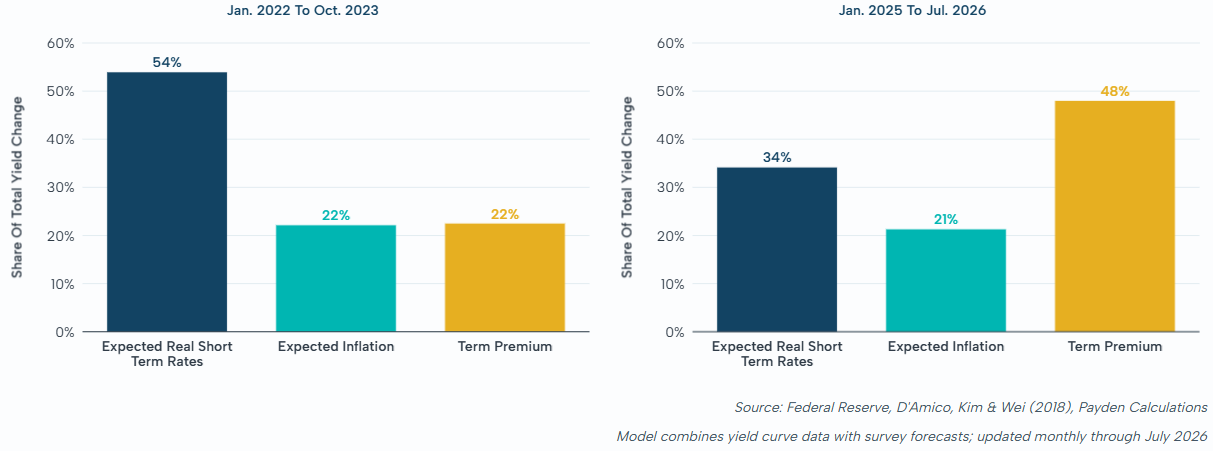
This week, U.S. 10-year Treasury yields matched their 2023 highs. What is driving rates higher? And are we experiencing a repeat of 2022-23? One way to answer these questions is to decompose yields into their key drivers: the real interest rate, the inflation premium, and the term premium. In both episodes, markets priced in a more hawkish Fed, driving yields up via the real rate component. The inflation premium also added to yields amid upside inflation surprises. Core inflation surged in 2022, and today it is much stickier than what investors expected at the start of the year. More interestingly, the term premium is doing more work today than in 2022, as heavy Treasury issuance, surprise buyback announcements, and the Fed’s water-downed forward guidance have investors demanding more compensation to hold duration. Where do rates go next? Answering that requires you to have a view on (a) whether the Fed hikes more or less than is already priced, (b) whether inflation remains stickier than markets expect, and (c) whether the fiscal situation improves. Our hunch is that the three drivers suggest long-term rates may still have room to rise.

News & Insights