Misery Index, The Sum Of Headline Inflation And The Unemployment Rate
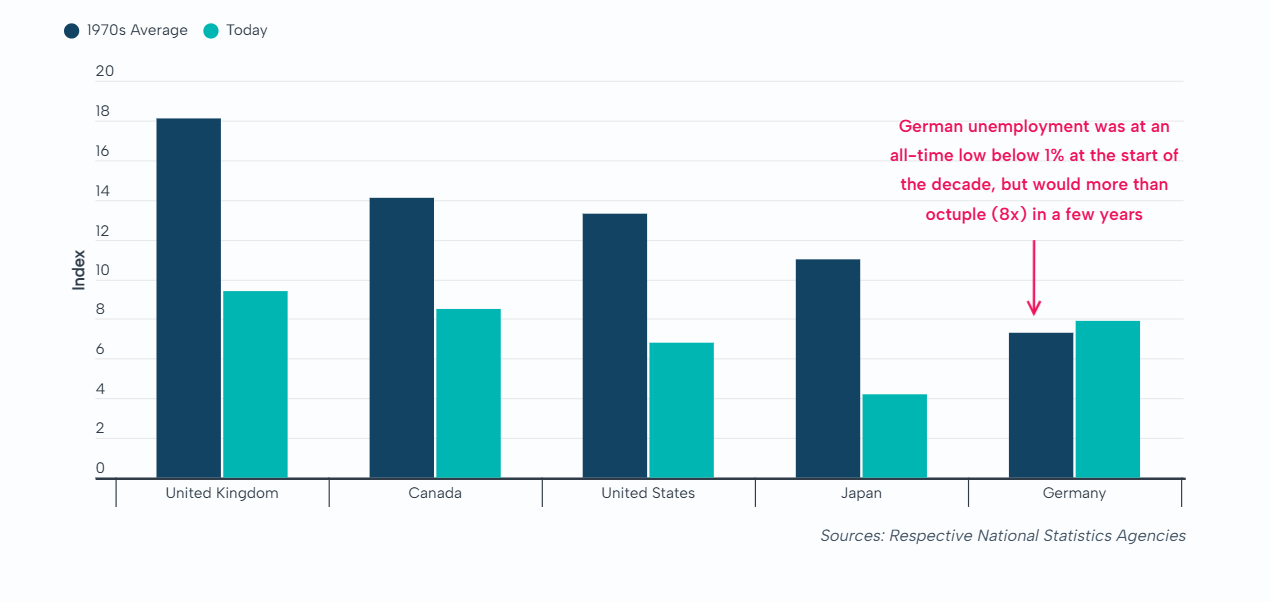
Elevated oil prices and talk of a recession have many colleagues and clients uttering the word “stagflation” and wondering if we should worry about a “repeat of the 1970s.” We think such prognostications are premature. First, as a refresher, stagflation is a portmanteau of a stagnant economy beset by inflationary impulses. So far, the current period pales in comparison to the poster child of stagflation, the 1970s, when the misery index, the sum of inflation and unemployment, was in the double digits worldwide. Second, the circumstances that provided the kindling for the 1970s were a series of shocks and poor monetary policy responses over the course of a decade, not a one-time spike in oil prices. We’d include the end of Bretton Woods in 1971, the 1973-1974 oil embargo, the 1979 Iranian revolution, and the 1980 Iran-Iraq war as examples of the series of shocks that hit one after another over the course of a decade. As a result, in 2026 dollars, oil prices increased 5x to $90 in 1974, surged to $180 in 1979, and remained elevated until the mid-1980s. Stagflation is on our radar, but it’s not yet our primary concern.