Average Monthly Potential Labor Force Growth By Year
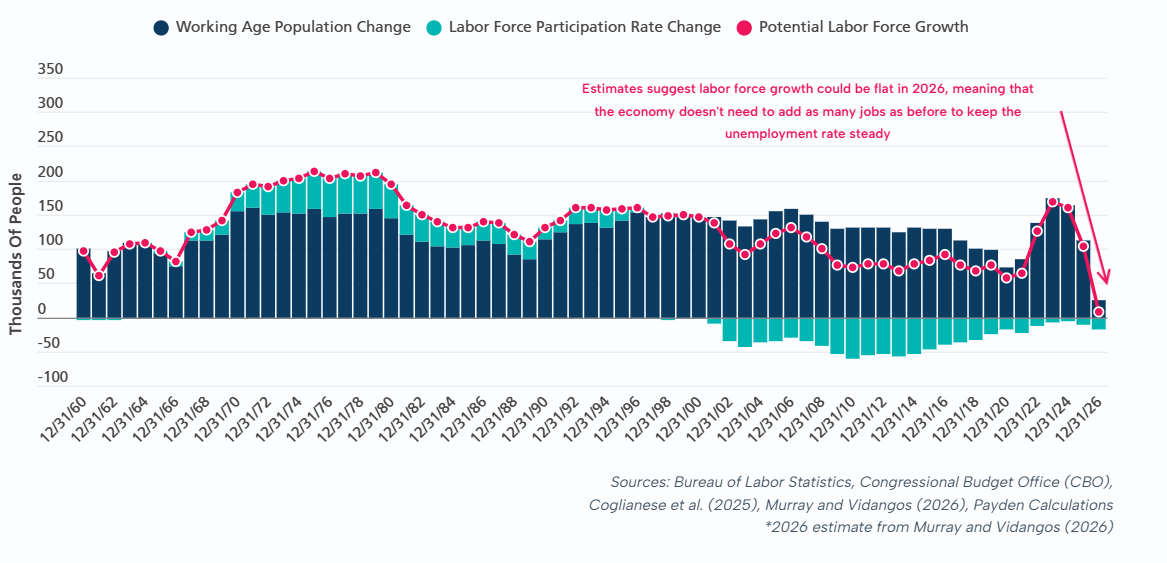
In January, Federal Reserve Governor Christopher Waller characterized the labor market as weak and fragile, advocating rate cuts. But last Friday, Waller said he would support a near-term policy rate hold. So, what’s changed? Not geopolitics. Instead, Waller highlighted that slower immigration and an aging population kept the labor force flat in 2025, a structural trend that will likely carry into 2026 and beyond. Near-zero labor force growth suggests the monthly pace of job growth required to keep the unemployment rate steady, also known as the “breakeven” pace, would also be near zero. In turn, the recent pattern of monthly job growth shifting between gains and losses may reflect a new “normal” rather than signaling meaningful labor market weakness. Of course, like Governor Waller, we are still worried about downside risks to the labor market, as the hiring rate and job-finding rate for unemployed workers have continued to fall. Nonetheless, while a lower breakeven reflects a subtle shift in views, it still suggests that Fed policymakers are likely to remain on hold—at least for now.