Rhine River Level at Kaub Versus Barge Freight Rates*
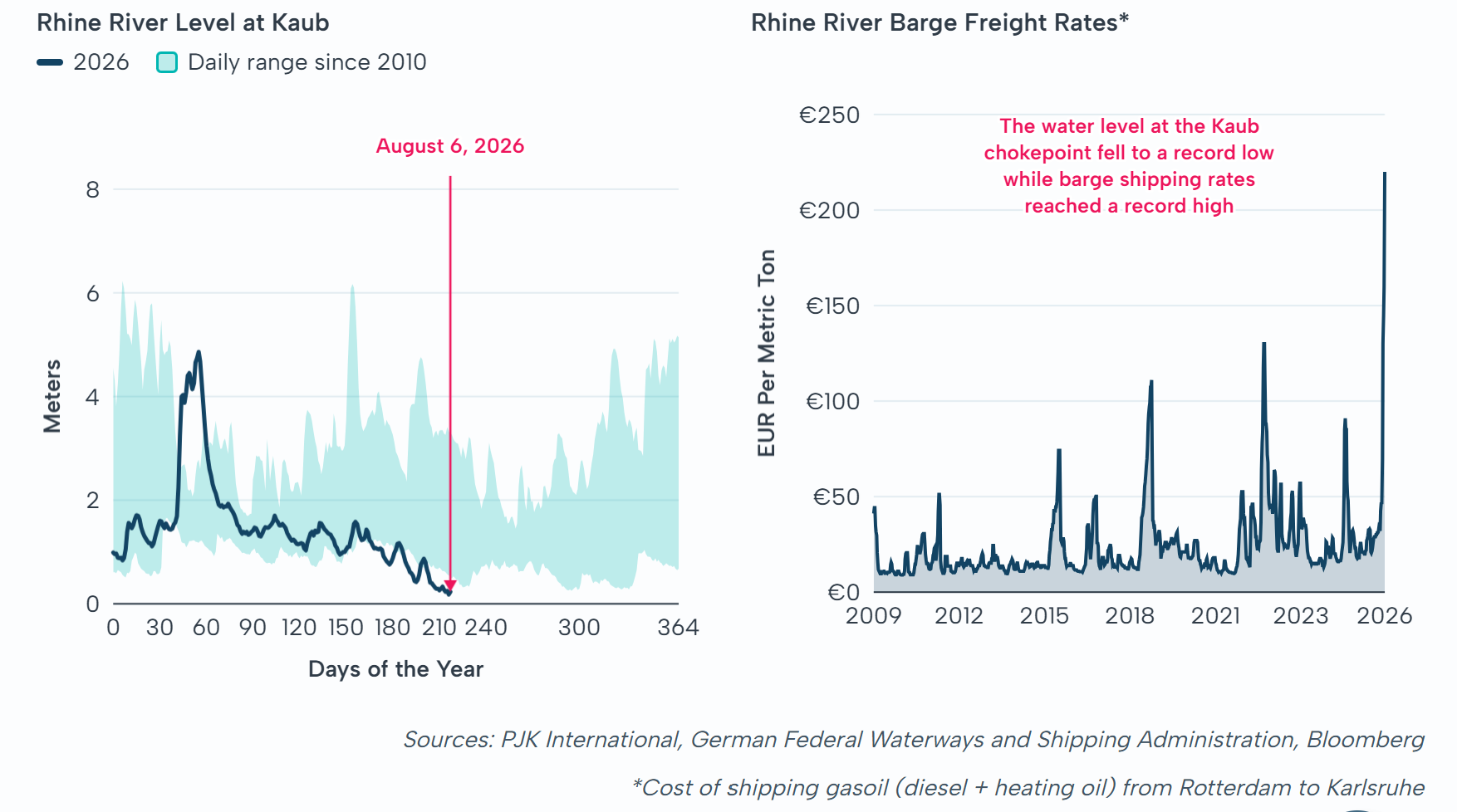
While much of this week’s attention was on the Strait of Hormuz, Europe has its own chokepoint to deal with: the Rhine River. The river is a vital artery for commerce in Europe, connecting the ports of the Netherlands to Germany’s industrial heartland and serving as a critical waterway for diesel and heating oil. The water level at Kaub, the shallowest part of the Rhine, dropped to its lowest level this week since measurement began in 1880. Shallow water means barges (flat-bottomed boats carrying freight) can only carry 20% of their capacity to avoid running aground. As a result, barge traffic has risen, and barge costs have spiked to record highs. When Rhine water levels last dipped this low, in 2018 and 2022, barge costs skyrocketed, and higher energy costs quickly passed through into consumer prices, while German industrial output struggled. For the European Central Bank, which has recently raised rates due to the impact of the Iran war on energy prices, higher shipping costs will hamper growth and boost consumer prices, putting policymakers in an even more difficult position.