
Nonfarm Labor Productivity Growth
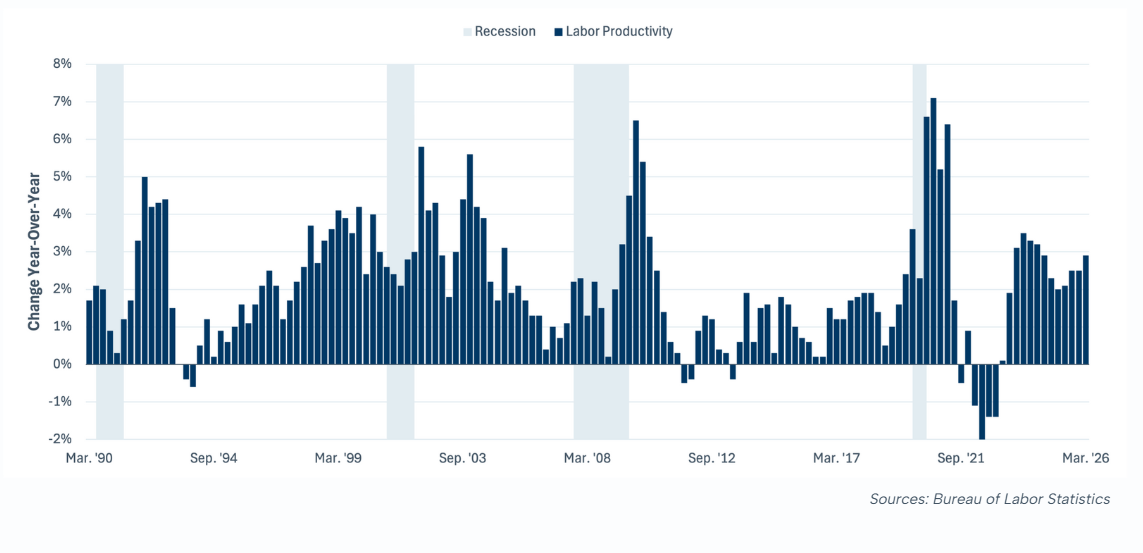
Data released this week showed that U.S. nonfarm productivity growth increased 2.9% over the last year in the first quarter of 2026, in line with the higher productivity growth trend since 2023. Is AI adoption actually making workers more productive? For a small subset of the population, maybe, but we suspect it probably has more to do with math. Productivity is calculated as output per hour worked, so with little to no net employment growth in 2025 and still-resilient real GDP growth, measured productivity will naturally appear stronger. Much of the recent GDP growth reflects AI capex that boosts output through fixed investment but requires little labor. As it turns out, several other measures of productivity that better capture underlying economic efficiency, such as the utilization-adjusted total factor productivity measure from the San Francisco Fed, suggest productivity has been slowing, implying that AI-driven long-run productivity remains an early promise. In the short run, though, the AI buildout is keeping the U.S. economy on a solid footing despite the lack of job growth.