Composite Global PMI*, Current Versus 6-Month Change
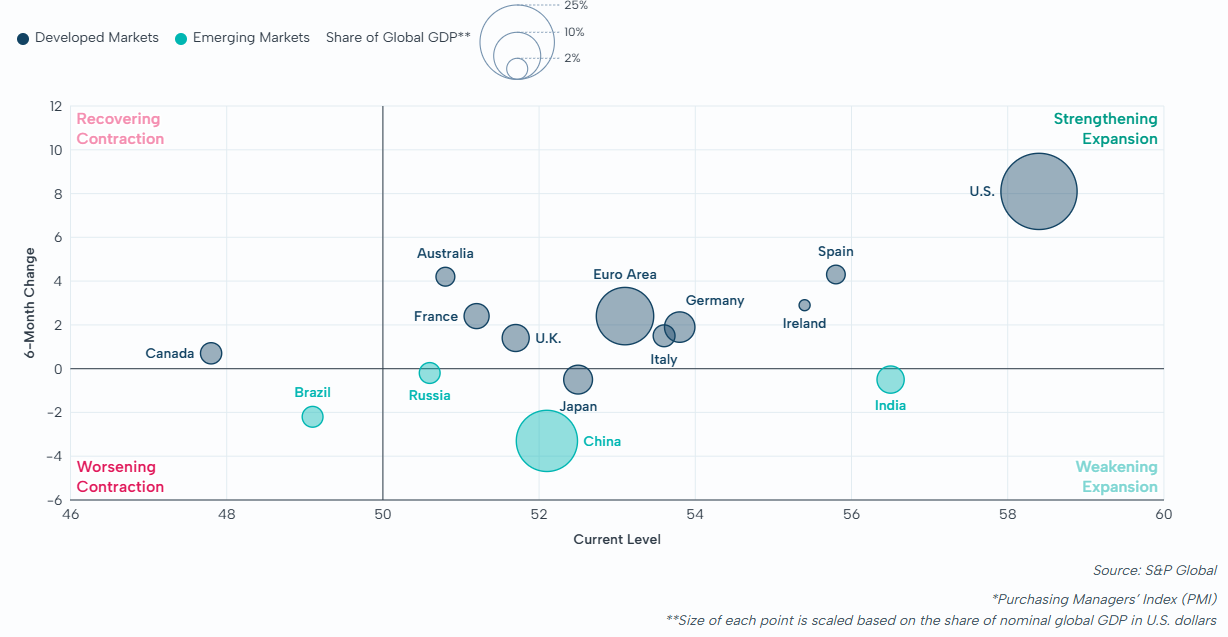
This week, we traveled across Europe and fielded questions from European investors about geopolitics, U.S. politics, AI, U.S. fiscal concerns, inflation, and the U.S. dollar’s status. Let’s take one of the hot-button issues: fiscal fears. No one is an apologist for the U.S. fiscal situation, but it’s far from a crisis. After all, when comparing net debt to GDP among G7 countries (which excludes intra-government debt holdings), the U.S. has a higher debt burden than Canada and Germany, but a lower one than France, Italy, and Japan. Aside from U.S. currency reserve status, the U.S. has something else: growth. The U.S. economy has grown 15.6% cumulatively since 2019, compared with Germany and France at just 2% and 6%, respectively. This week’s S&P Global PMI release reinforces the point: the U.S. composite index posted the largest six-month gain of any major economy and now sits at the top of the pack, suggesting business sentiment is turning up as the AI investment boom broadens. Given that the U.S. federal government has rarely cut spending since the end of World War II, more economic growth, led by innovation, investment, new firm formation, and productivity, is the only way out of a fiscal problem.